The Way Home
One of my very good friends recently sent me a photo of himself holding a gentle pigeon he had rescued from a murder of crows outside of his workplace. He described how trusting the bird was, completely unaware that the species offering it sanctuary, in many ways was also capable of cruelties much greater than those of the crows that attacked her. The female pigeon, also known as a hen, belonged to a local man who bred and trained homing pigeons in Geraldton. Of all the messages I have received from my friends this year, this was the highlight.
Training homing pigeons is a practice with a long history that also raises complicated questions around animal welfare. Before the introduction of telephones and modern communication, these remarkable birds carried messages across vast distances, notably during times of war, with some recorded flying more than 1500 kilometres to deliver a single message. They quickly became trusted human companions. My affection for animals has always extended far beyond our four-legged companions we so openly welcome into our homes. To me, pigeons have always deserved the same respect. They are relics of a slower time, a living reminder of our long and intertwined evolution alongside nature. But as telephones replaced wings, domesticated pigeons were discarded and abandoned to cities that had little place for them. They were once valued for their loyalty and endurance and now forage among concentre and rubbish, becoming entangled in fishing line and driven away from ledges where they try to nest; trying to survive in a world that no longer remembers why they were there in the first place. It’s another example of the way humans will often use animals to fulfil a need, only to discard them once something newer, faster or more convenient takes their place.
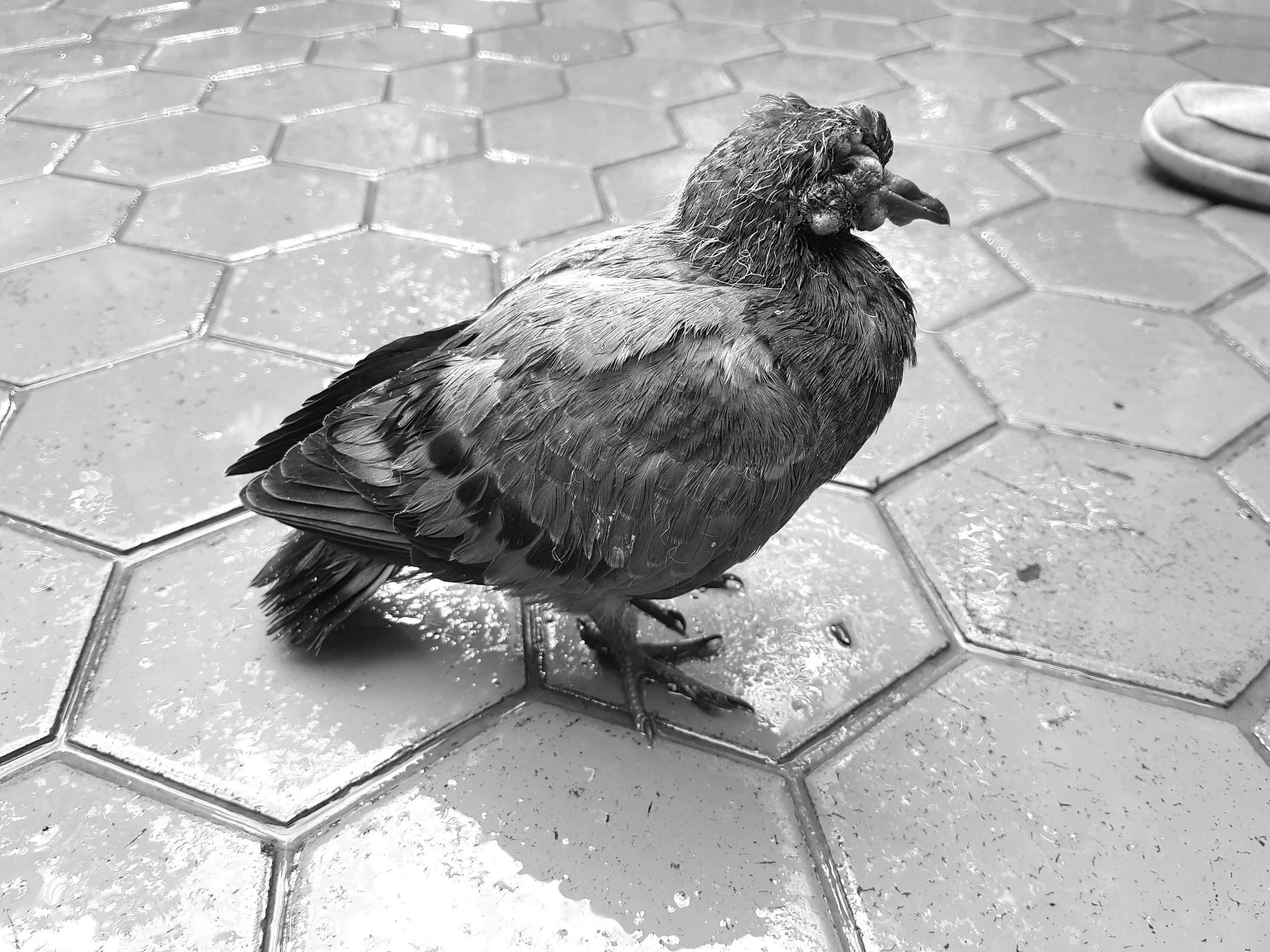
David’s recue journey reminded me of my own many years earlier. Growing up, pigeons nested themselves on a narrow ledge outside of my north facing bedroom window, barely a meter wide. It sheltered them from the rain and throughout the day, their gentle cooing drifted into my room as they raised their young, year after year. One day, a tiny pigeon must have fallen off from the ledge. She couldn’t fly and had no way of making it back up. I brought her inside, placing her in a cardboard box while I searched for everything, I could learn about caring for an injured and sick pigeon. We named her Neon. It turned out, Neon was blind. I carefully gave her water and fed her softened oats before buying a small cage where she could safety rest. She was gentle and completely trusting, as though she somehow understood she was no longer in danger. It wasn’t long before I realised, she was suffering from a severe infection that was making it harder for her to breathe. Despite everything, she didn’t survive.
She was only with me for a short time but during her final days, she knew warmth, not fear. And safety instead of exposure. Sometimes that is all we can offer another living creature and sometimes, that is enough.

Neon 2018