Luk Krueng
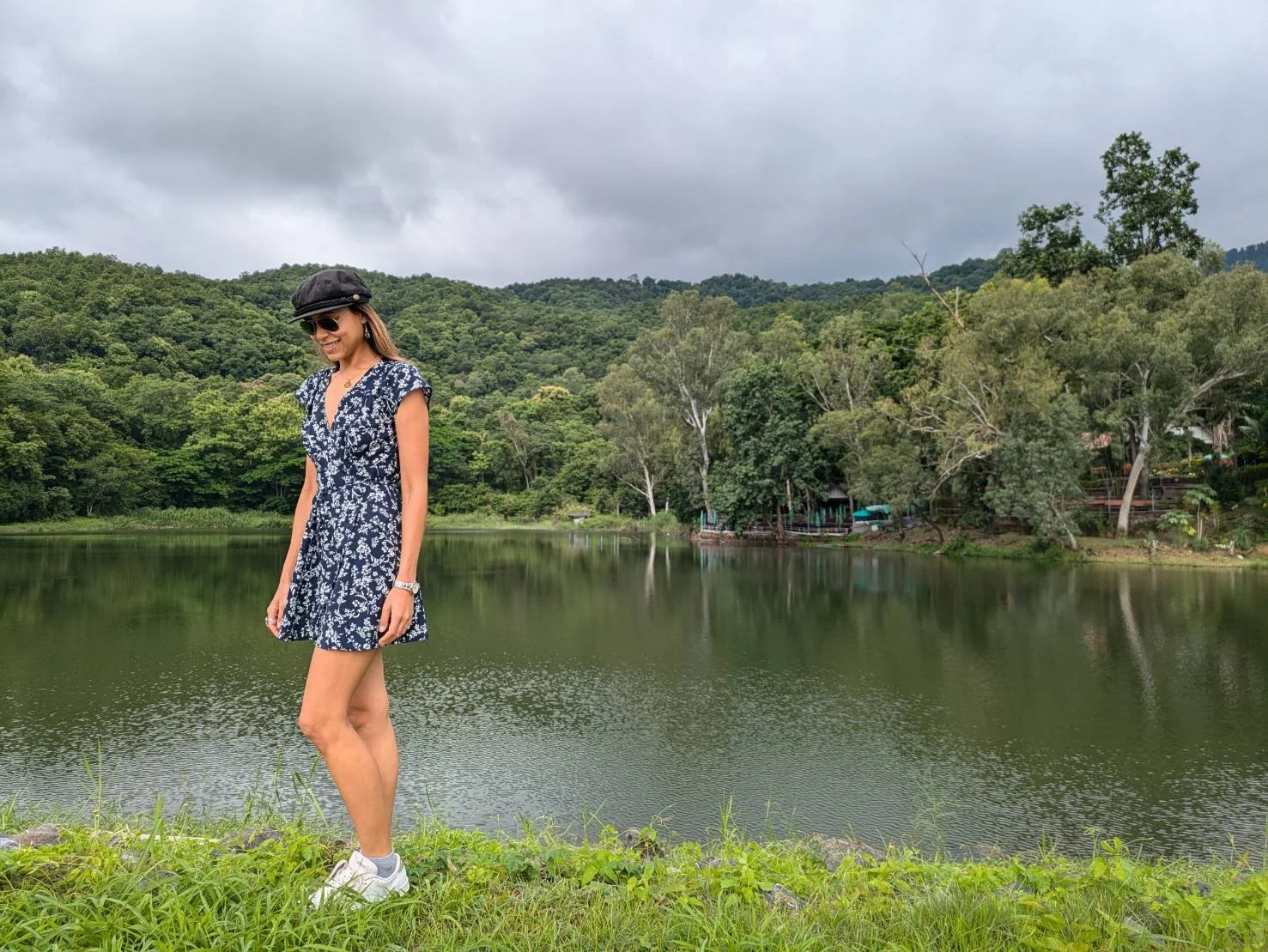
I grew up as a Luk Krueng, or half child as they literally say in Thai. I spoke three languages, four by the time I left school to pursue a career in scuba diving in the south of Thailand. I was too white to be considered truly Thai and too Asian to be considered fully German, so I occupied the space in between, speaking with a distinct American accent – a side effect of attending an international school. Yet my accent was never fixed and shifted subtly depending on where I was, who I was speaking to and which version of myself the environment around me demanded. Today, there are hundreds of international schools across Thailand, educating children from transnational families whose lives span cultures, languages and passports. We share an experience that is difficult to explain to those who have always had a singular sense of home, growing up feeling simultaneously familiar and foreign, growing up with just enough to fully belong anywhere. Globalisation has quietly expanded this community of third culture kids. We are a niche yet expanding group of humans and our experiences remain strangely invisible. I’ve learned to adapt with remarkable ease but adaptation often came at the expense of rootlessness.
When I left to pursue diving, many of my classmates also departed. Some returned to the country they called “home” and others travelled the world or left to study somewhere else oversees. We were scattered across continents, each trying to define our own idea of what home meant. Home becomes less of a location and more of a collection of memories, languages and people scattered across different corners of the world. In 2018, I made the permanent move to Australia. It was not another journey abroad but a beginning of building an entirely new life. It wasn’t until years later, I came across the term third culture kids. For the first time, there was a language to describe what I had struggled to articulate for so long because my life only existed in translation. Not between my languages but between cultures and expectations and identities.
Australia presented a different challenge where I found myself learning how to belong again. It is young nation in many ways, yet one with the oldest continuous living culture. As an immigrant, I found myself captivated by Aboriginal history and the stories that shaped this land for many thousands of years. The practical realities of moving here were less romantic. Making friends was difficult. I had grown up speaking English every day, yet I quickly realised I spoke a different kind of English. My vocabulary and expressions reflected the international schools of Thailand rather than regional and rural Australia. It was a humbling reminder that language was more than just grammar. Almost a decade later and sometimes, I still feel like I’m trying to find my footing.
The life I had imagined for myself unfolded differently. I changed careers, almost by accident and it wasn’t a path driven by lifelong ambition or childhood dreams but by opportunity and gratitude. Looking back, some of my biggest decisions have been less about following a carefully laid out plan and more about learning to navigate unfamiliar waters. Somewhere along the way, Australia became home, not because it suddenly felt like it but because I found people who made space for every version of me. Friends who understand that my stories rarely begin in the same country they end in or question why my accent shifts, why I disappear back to Thailand when I can or why I sometimes seem a little untethered. They leave room for me to be less grounded, a little chaotic and entirely myself. Whatever version that is at the time. Maybe that is what belonging has always been.
Returning home to Thailand every year is a culture shock in its own and another act of translation. Each time I visit my family, I feel as if I’m reintegrating into a place that is both deeply familiar yet unexpectedly foreign. I still see my friends from school whenever I return home. Time has scattered us across the world yet somehow, we always find our way back to the same place, some streets, same conversations, different bars. It was a privilege to see friends I have known since we were in single digits. We spoke about the lives we’ve built and how they have, for better or worse, shaped us and everything that existed in the spaces between. Careers, relationships, failures, grief. The years that disappeared while we were busy chasing ourselves and what it cost to get there. There was something comforting about reconnecting after all the years we spent losing ourselves, only to find fragments of who we once were sitting across the table, sharing a drink in our hometown.
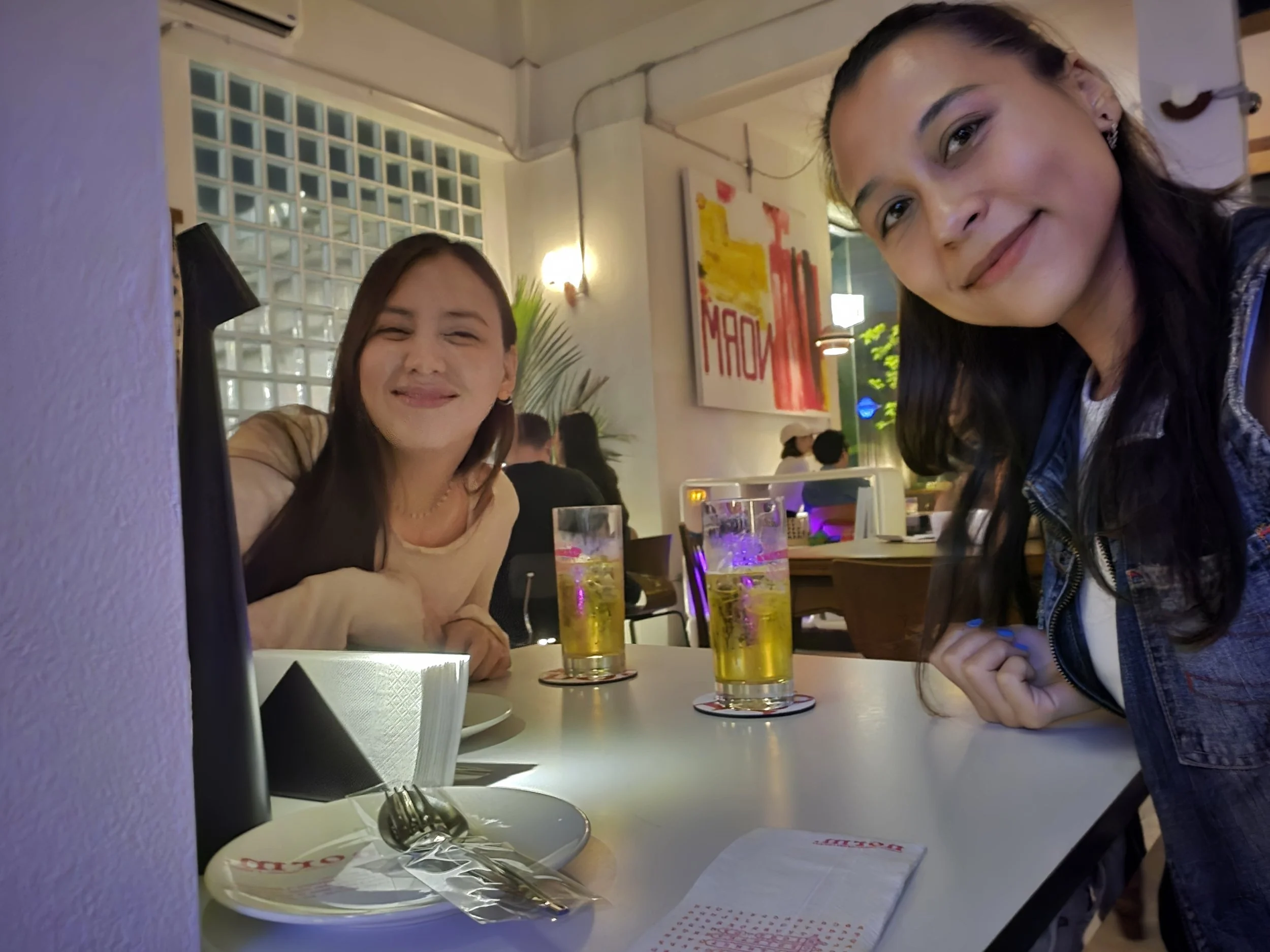
Cherry March 2026
Our paths have rarely been straight. Returning home feels strangely unfamiliar, as though we are visitors in the places that once defined us. Riding motorbikes through narrow streets without helmets, before we understood the risks, climbing mango trees after playing football in the warm monsoon rain until our uniforms were soaked and making music together with whatever instruments we could find. And beneath all that, the truth that few of us admit aloud: despite building lives elsewhere, a part of us still longs to build a life back “home”.
The question now is, where is home?